Investing is how you put money to work so it can grow faster than inflation erodes it. For beginners, the goal is not to pick the next hot stock but to build a simple, diversified, low-cost portfolio you can hold for decades. This investing for beginners guide walks through the core concepts, the accounts to use, and the mistakes that cost new investors the most money.
Why Investing Matters More Than Saving Alone
Cash in a savings account is safe, but it rarely keeps pace with inflation over long periods. Historically, the S&P 500 has returned roughly 10% per year on average before inflation, though individual years vary widely and losses are common in any given year. That long-run growth is what makes investing the primary tool for goals like retirement, a home down payment years out, or funding a child's education.
Time is your biggest advantage as a beginner. Thanks to compound growth, money invested in your 20s or 30s has decades to recover from downturns and keep compounding. A $5,000 investment earning 7% annually grows to about $38,000 in 30 years without any additional contributions.
Understand the Main Asset Classes
Before choosing investments, know what you are buying:
- Stocks are ownership shares in a company. They offer the highest long-term growth potential but can be volatile.
- Bonds are loans to governments or corporations that pay interest. They are generally steadier than stocks and help cushion a portfolio.
- Mutual funds and ETFs pool many securities into one fund. Index funds track a market benchmark like the S&P 500 or the total U.S. stock market at very low cost.
- Cash and money market funds are for short-term needs and emergency savings, not long-term growth.
For most beginners, a low-cost index fund is the simplest way to own hundreds of companies at once and avoid the risk of betting on a single stock.
Use the Right Accounts First
Where you invest matters as much as what you buy. In the U.S., take advantage of tax-advantaged accounts before a regular brokerage account:
- 401(k) or 403(b): Contribute at least enough to earn your full employer match. That match is an immediate return on your money. For 2025, the employee contribution limit is $23,500, with a $7,500 catch-up for those 50 and older.
- Roth or traditional IRA: The 2025 IRA contribution limit is $7,000, with a $1,000 catch-up for those 50 and older. Roth contributions are made with after-tax dollars and grow tax-free.
- Health savings account (HSA): If you have a high-deductible health plan, an HSA offers a rare triple tax advantage.
- Taxable brokerage account: Use this for money beyond your tax-advantaged accounts or goals before retirement age.
Build a Simple, Diversified Portfolio
Diversification spreads risk across asset classes, sectors, and geographies. A common beginner approach is a two- or three-fund portfolio: a total U.S. stock market index fund, an international stock index fund, and a bond fund. The mix depends on your timeline and comfort with volatility. Someone 30 years from retirement might hold 80–90% stocks, while someone nearing retirement may shift toward bonds.
Watch costs. Expense ratios on index funds are often under 0.10%, while actively managed funds may charge 0.50% to over 1%. Over decades, a 1% fee can reduce your ending balance by a meaningful amount. Also favor broad diversification over concentrated bets on a single company or sector.
Automate and Stay the Course
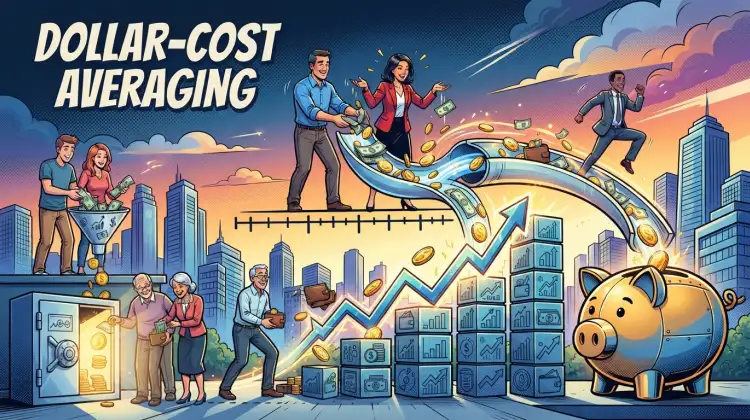
Set up automatic contributions from each paycheck so investing happens before you spend. This practice, called dollar-cost averaging, means you buy more shares when prices are low and fewer when they are high, smoothing your entry over time. When markets fall, resist the urge to sell. Selling during a downturn locks in losses and often means missing the recovery. Investors who stayed invested through the 2008 financial crisis and the 2020 pandemic selloff were rewarded as markets recovered.
Rebalance once a year or when your allocation drifts significantly from your target. Keep an emergency fund of three to six months of expenses in cash so you never have to sell investments to cover a surprise bill.
Common Beginner Mistakes to Avoid
- Chasing hot stocks or meme investments based on social media hype.
- Ignoring fees and fund expense ratios.
- Investing money you will need within a few years.
- Panic-selling during market declines.
- Skipping the employer 401(k) match.
What to Remember
Start early, keep costs low, diversify broadly, and use tax-advantaged accounts before taxable ones. You do not need to pick winning stocks to build wealth; a simple index fund portfolio held for the long term is a proven path. Automate contributions, ignore short-term noise, and revisit your plan once a year. The best investing strategy is the one you can stick with through market ups and downs.