Exchange-traded funds (ETFs) have become one of the most common ways Americans build long-term wealth. According to the Investment Company Institute, U.S. ETF assets passed $9 trillion in 2024, held across thousands of funds covering everything from broad stock indexes to bonds and commodities. For a beginner, the appeal is simple: a single share can give you instant diversification at a low cost, and you can buy or sell it during the trading day just like a stock.
This guide walks through what an ETF actually is, how it differs from a mutual fund, how to pick your first fund, and the practical steps to open an account and place your first order.
What Is an ETF, Exactly?
An ETF is a basket of securities—stocks, bonds, or other assets—that trades on an exchange under a ticker symbol. When you buy one share of a broad-market ETF, you own a tiny slice of every company in that index. Most ETFs are index funds, meaning they track a published benchmark rather than relying on a manager to pick winners.
Two features matter most for beginners:
- Intraday trading. Unlike mutual funds, which price once at the end of the day, ETFs trade throughout the session, so you know roughly what price you'll pay when you click buy.
- Low expense ratios. Many broad index ETFs charge 0.03% to 0.10% per year. On a $10,000 balance, a 0.05% ratio costs about $5 annually.
ETFs are structured as either traditional funds or grantor trusts, and most are regulated under the Investment Company Act of 1940. That structure provides the same investor protections as mutual funds, including daily disclosure of holdings.
ETFs vs. Mutual Funds: What's the Difference?
Both can hold the same underlying securities, but the mechanics differ. Mutual funds are bought directly from the fund company at the net asset value set after market close. ETFs are bought from other investors on an exchange through your brokerage, with prices that fluctuate during the day.
Practical differences for a new investor:
- Minimums. Many mutual funds require a $1,000 to $3,000 minimum; most ETFs require only the price of one share.
- Costs. Index ETFs generally have lower expense ratios than comparable actively managed mutual funds, and no-load ETFs avoid sales charges.
- Automation. Many brokerages now allow fractional-share ETF purchases and automatic recurring investments, closing a gap that once favored mutual funds.
- Taxes. ETFs tend to distribute fewer capital gains than mutual funds because of their in-kind creation and redemption process.
How to Choose Your First ETF
Start with your goal and time horizon, not with a hot ticker. If you're investing for retirement decades away, a broad U.S. equity ETF is a reasonable core holding. If you need the money in three years, a short-term bond ETF or a savings product may fit better.
When comparing funds, check these factors:
- Index and holdings. Read the fund's prospectus and top-10 holdings. A total-market fund holds thousands of stocks; a sector fund may hold 30.
- Expense ratio. Lower is generally better for index products, but a few basis points rarely justify a worse index.
- Assets under management. Larger funds tend to have tighter bid-ask spreads and lower closure risk. Funds with several billion in assets are typically well established.
- Tracking difference. Compare the fund's returns to its benchmark over one, three, and five years. Small gaps are normal; persistent large gaps are a red flag.
- Bid-ask spread and volume. Trade liquid ETFs during market hours to avoid paying more than necessary.
A common beginner portfolio is a single total U.S. stock market ETF, later diversified with an international ETF and a bond ETF as the balance grows. Target-date and asset-allocation ETFs bundle this for you if you prefer a hands-off approach.
How to Open an Account and Buy Your First ETF
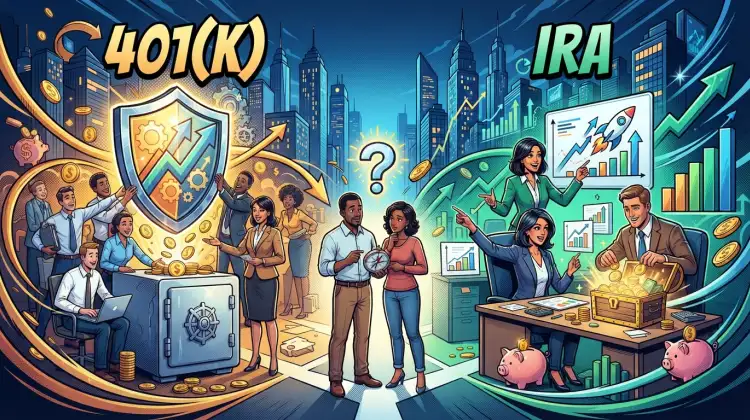
You'll need a brokerage account. Major U.S. brokers—including Fidelity, Charles Schwab, and Vanguard—offer commission-free online ETF trades and no account minimums on standard brokerage accounts. Many also offer Roth IRAs and traditional IRAs, which are worth considering for retirement money because of their tax treatment.
The process looks like this:
- Open and fund the account. You'll provide your Social Security number, verify your identity, and link a bank account for transfers. Electronic transfers typically settle in one to three business days.
- Search the ticker. Enter the ETF's symbol in your broker's trade screen and review the quote, expense ratio, and holdings before ordering.
- Place a market or limit order. A market order fills immediately at the best available price. A limit order sets the maximum you'll pay—useful for less liquid ETFs.
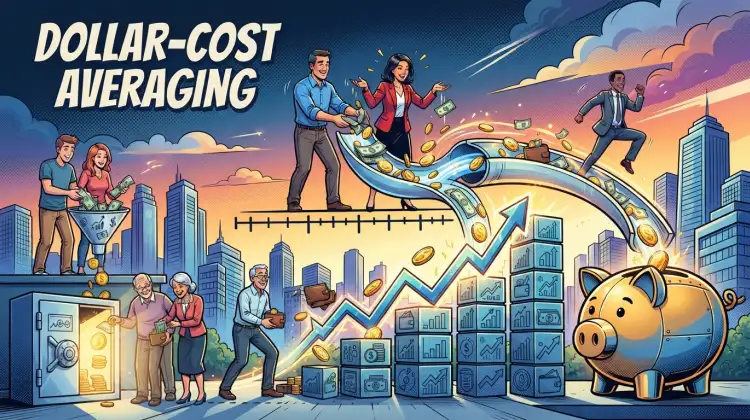
- Set up automatic investing. Recurring purchases smooth out market swings and build the habit. Even $50 a week compounds meaningfully over decades.
Remember that contributions to a taxable brokerage account are made with after-tax dollars, while an IRA may offer a deduction or tax-free growth depending on the type. The IRS publishes annual contribution limits for IRAs, which change periodically.
Common Beginner Mistakes to Avoid
Even simple strategies go wrong when investors act on emotion. Watch for these pitfalls:
- Chasing performance. Last year's top sector fund is often next year's laggard. Broad indexes avoid this guesswork.
- Trading too often. Frequent buying and selling triggers short-term capital gains taxes and can erode returns.
- Ignoring fees and spreads. A 1% expense ratio on a $100,000 portfolio costs $1,000 a year—money that never reaches your account.
- Overlooking diversification. Holding five technology ETFs is not diversification; it's concentration with extra steps.
- Panic selling. Market declines are normal. Since 1926, the S&P 500 has experienced many double-digit drawdowns and still delivered positive long-term returns.
What to Remember
ETF investing for beginners comes down to a few durable principles: choose broad, low-cost index funds that match your time horizon; keep costs and taxes low; invest consistently through automatic contributions; and resist the urge to trade on headlines. You don't need to pick winning stocks or time the market—a simple, diversified ETF portfolio held for the long term is a proven path to building wealth. Start small, review your holdings once or twice a year, and let compounding do the heavy lifting.