You do not need a large lump sum to begin building wealth in the stock market. In fact, the most important variable in long-term investing is not the size of your first deposit—it is time and consistency. Thanks to fractional shares, zero-commission brokers, and low-cost index funds, a US investor can now start with $5, $50, or $500 and still own a diversified portfolio. This guide explains the mechanics, the account choices, and the pitfalls to avoid so your first dollars work as hard as possible.
Why Small Amounts Still Matter
Compounding rewards patience more than it rewards size. If you invest $100 a month and earn an average annual return of 7%, you would have roughly $17,000 after 10 years and about $52,000 after 20 years, assuming returns are reinvested. The math is not a promise—market returns vary and can be negative in any given year—but it illustrates why starting early with modest sums beats waiting until you have "enough."
The other reason small amounts work today is structural. The Securities and Exchange Commission (SEC) requires brokers to act in your best interest under Regulation Best Interest, and most major US brokerages have eliminated commissions on stock and ETF trades. That means a $25 purchase is no longer eaten alive by a $9.99 trading fee.
Step 1: Get Your Financial Foundation in Place
Before buying a single share, make sure investing will not create a cash-flow crisis. A practical order of operations:
- Pay off high-interest debt first. A credit card charging 20%+ APR costs you far more than the stock market is likely to return. Paying it down is a guaranteed return.
- Build a small emergency fund. Aim for at least one month of essential expenses in a high-yield savings account before investing aggressively; three to six months is the common target.
- Capture free money at work. If your employer offers a 401(k) match, contributing enough to earn the full match is usually the highest-return move available to you.
Only after these basics should you direct surplus cash into a taxable brokerage account.
Step 2: Choose the Right Account
Where you hold investments matters as much as what you buy. For most beginners, there are three realistic containers:
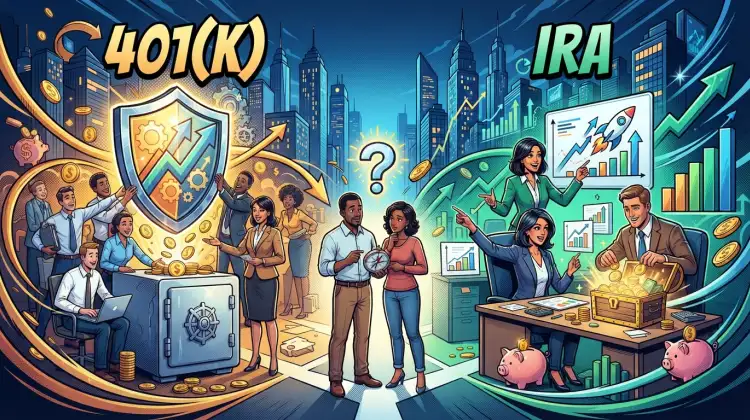
- Roth IRA: Funded with after-tax dollars; qualified withdrawals in retirement are tax-free. For 2025, the contribution limit is $7,000 ($8,000 if you are 50 or older), subject to income limits. Ideal if you are young and expect higher taxes later.
- Traditional IRA: Contributions may be tax-deductible, and growth is tax-deferred. Withdrawals are taxed as ordinary income.
- Taxable brokerage account: No contribution limits and no withdrawal restrictions, but you owe capital gains tax on profits. Best for goals before age 59½ or once tax-advantaged accounts are maxed out.
Many low-cost brokers let you open any of these with no minimum deposit. Compare the expense ratio of the funds offered, account fees, and whether the platform supports fractional shares.
Step 3: Buy Diversification, Not Lottery Tickets
The single most reliable way to invest small sums is through broadly diversified, low-cost index funds or exchange-traded funds (ETFs). A total US stock market index fund or an S&P 500 index fund gives you exposure to hundreds of companies in one purchase. An expense ratio of 0.03%–0.10% is typical for these products; a 1% annual fee can consume a meaningful share of your long-term returns.
Fractional shares are the key enabler here. If a single share of a fund costs $400, fractional investing lets you buy $20 of it. This is how a $50 monthly contribution stays fully invested instead of sitting in cash while you save for a whole share.
A simple starter allocation for someone with decades until retirement might be a total stock market fund plus a total international fund, with a bond fund added as you approach your goal. Target-date funds automate this glide path for a slightly higher fee.
Step 4: Automate and Ignore the Noise
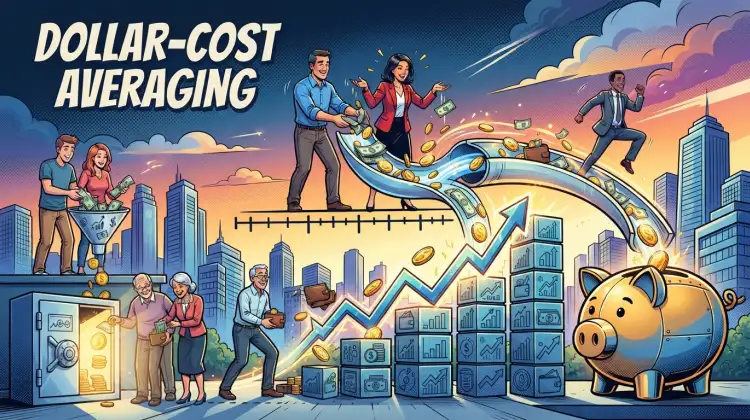
Set up automatic recurring transfers on the same day each month, ideally right after payday. Automation removes emotion from the process and ensures you buy through both rising and falling markets—a practice known as dollar-cost averaging. Research consistently shows that investors who trade frequently tend to underperform those who buy and hold, largely because of timing errors and costs.
Resist the temptation to chase meme stocks, crypto hype, or leveraged products with money you cannot afford to lose. If you want a small "fun" allocation—say 5% of your portfolio—keep it separate from your core index holdings and treat it as entertainment spending, not retirement savings.
Common Mistakes That Cost Beginners Money
- Leaving cash uninvested. Money sitting in a brokerage sweep account earns little; put it to work.
- Ignoring fees. Trading commissions, account maintenance fees, and high expense ratios compound against you.
- Panic selling. Selling during a downturn locks in losses and often means missing the recovery.
- Over-diversifying with tiny sums. Owning 15 different funds with $500 spreads you too thin; one or two broad index funds is enough.
- Forgetting taxes. In a taxable account, holding investments longer than one year qualifies for lower long-term capital gains rates.
The Short Version
Starting with little money is entirely feasible in the US market. Pay off expensive debt, build a small cushion, then open a low-cost brokerage or IRA account with no minimum. Buy a broad index fund using fractional shares, automate a monthly contribution you can sustain, and let compounding do the heavy lifting. The amount you start with matters far less than starting at all—and staying invested through the inevitable ups and downs.